How Is Automotive Paint Matched After an Auto Body Repair?
After an accident, repairing the dent or damaged panel is only part of making a vehicle look like itself again. The new paint also needs to match the finish surrounding the repair.
That sounds simple enough. Find the factory paint code, mix the color, and spray it. In reality, professional auto paint matching involves considerably more precision.
Automotive paint is typically matched after an auto body repair by using the vehicle's factory paint code as a starting point, identifying the correct color variant, testing the formula with spray-out cards, and blending the new finish into surrounding panels when necessary. The goal is to create a repair that transitions naturally into the vehicle's existing finish.
Paint matching is an important part of the automotive refinishing process because even excellent bodywork can stand out when the color or finish is not right.
Why Isn't the Factory Paint Code Enough?
Every vehicle has a factory paint code that identifies the original color used by the manufacturer. That code gives a professional refinisher an important starting point for determining the correct paint formula.
But a paint code does not necessarily mean there is only one possible formula for that color.
Manufacturing differences can result in color variants, which are slightly different versions of the same factory color. On top of that, the paint already on a customer's vehicle has spent years exposed to sunlight, weather, washing, and everyday use.
That means two vehicles with the same factory paint code may not look exactly the same by the time they arrive at an auto body shop.
Professional paint matching is not about blindly reproducing a paint code. It is about matching the vehicle that is actually in front of the painter.
What Are Automotive Paint Color Variants?
Color variants help account for differences that can occur within a particular factory paint code.
A professional refinisher can use the vehicle's paint information along with color-matching resources to determine which available variant most closely resembles the existing finish.
This becomes especially important with metallic, pearl, and other effect finishes. Small differences in pigment, metallic orientation, application, or formula can influence how a color appears under different lighting conditions.
Elite uses PPG Deltron NXT as part of its refinishing process. PPG's premium solventborne system incorporates modern toners, pearls, and effect pigments, along with an extensive color database designed to support accurate reproduction of modern vehicle finishes.
You can learn more about PPG Deltron NXT's color capabilities directly from PPG.
What Is a Spray-Out Card?
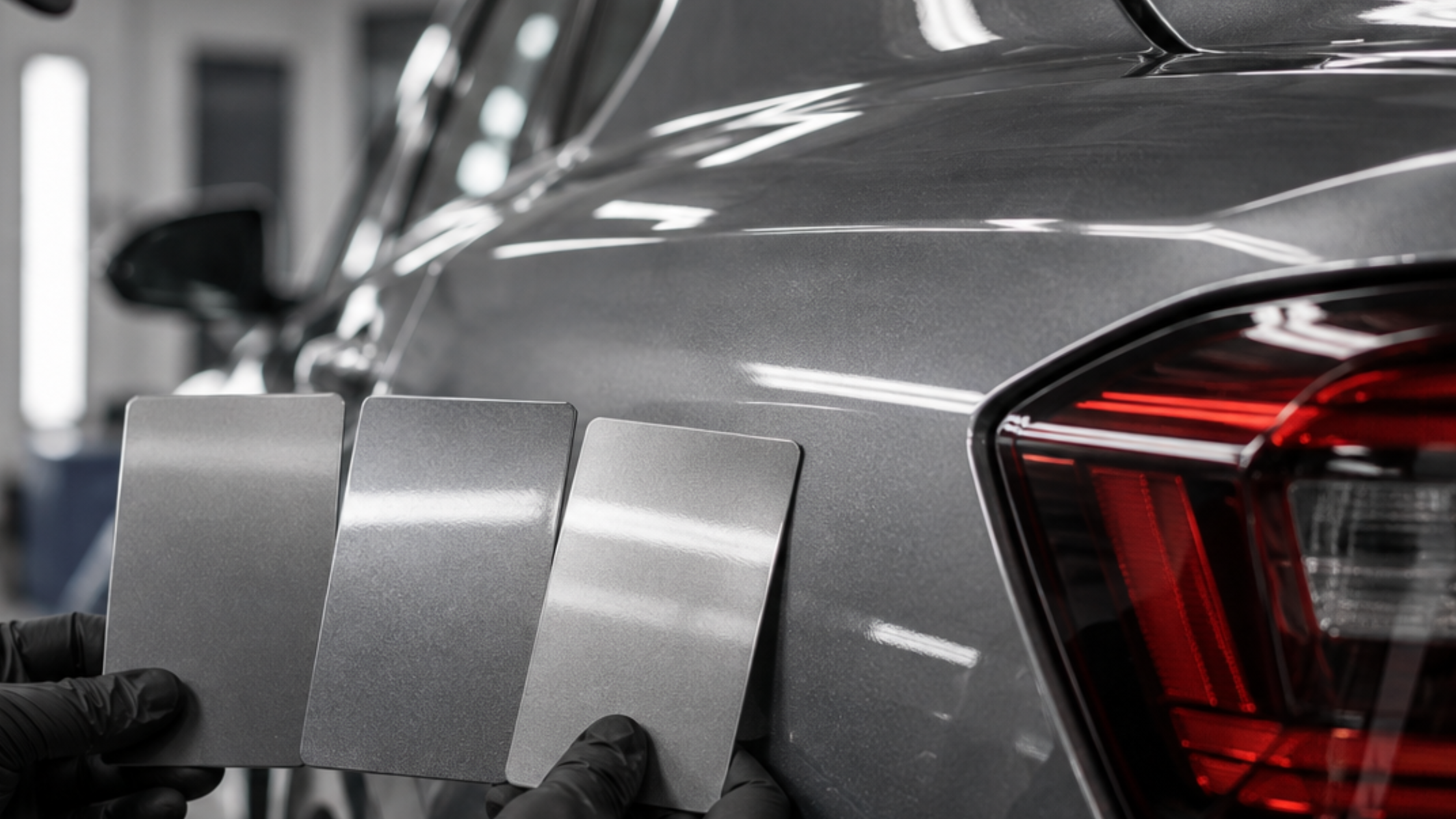
Once a paint formula has been selected, a painter may use a spray-out card to evaluate the color before applying it to the repaired vehicle.
A spray-out card allows one or more of the selected paint formulas to be applied to a test surface so the painter can compare the result with the vehicle's existing finish. This gives the refinisher an opportunity to evaluate the color and make adjustments before moving forward with the actual repair.
For the customer, this additional step may never be visible in the finished product, but that is exactly the point.
Some of the most important steps in quality auto body paint repair happen before new paint ever reaches the vehicle.
Why Are Adjacent Panels Sometimes Blended?
Even with a carefully selected formula, applying new paint to one repaired panel can sometimes create a visible transition between the new finish and the existing paint around it.
This is where blend panels can become part of the refinishing process.
Rather than creating a hard transition between the newly refinished panel and the surrounding finish, color may be blended into an adjacent panel when appropriate. This can help create a more natural transition between the repaired area and the existing paint.
Whether a repair requires localized refinishing, a complete panel, or blending into surrounding areas depends on the damage and the finish involved. Our guide to spot repair vs. a full panel repaint explains why the right approach can vary from one repair to another.
The goal of blending is not to compensate for poor color matching. It is another technique skilled refinishers can use to create a seamless finished repair.
Why Are Some Automotive Paints Harder to Match?
Not every automotive finish presents the same challenge.
Solid colors can still require careful matching, but metallics, pearls, and other effect finishes introduce additional variables. Their appearance can change depending on lighting, viewing angle, pigment orientation, and application technique.
Specialty finishes can add another layer of complexity. Matte and satin finishes require specialized repair and refinishing techniques because the final appearance depends on more than matching color alone.
That is one reason collision paint repair requires more than simply having access to the correct formula.
The painter's experience, spray technique, equipment, preparation, color evaluation, and refinishing system all contribute to the finished result.
Does the Quality of the Paint System Affect Color Matching?
The products being used matter too. A professional paint system gives a refinisher access to the colors, variants, toners, effect pigments, and supporting products needed to reproduce increasingly complex automotive finishes.
At Elite Automotive Finishes, we use PPG Deltron NXT, a premium solvent-based refinishing system chosen for the quality and color capabilities it provides our painters.
Automotive paint systems can differ in color accuracy, finish quality, clear coat performance, and durability. The products a shop chooses are an important part of the overall refinishing process. Quality paint technology gives a skilled refinisher better tools, but experience and precision are what turn those tools into a finished repair.
Can New Paint Match Older Paint?
In many cases, a professional refinisher can create a finish that blends naturally with the existing vehicle even when the original paint has been exposed to years of use.
However, this is another reason the physical vehicle needs to be evaluated rather than relying entirely on its original factory information.
The condition of the existing finish, previous paintwork, fading, damage, and the color itself can all influence the approach. A quality car paint repair takes those factors into consideration before refinishing begins.
If you're wondering what the entire vehicle can look like after an accident, our guide to whether your car can be the same after collision repair explains how bodywork, paint matching, repair quality, and the extent of the original damage influence the finished result.
Why Does Experience Matter in Automotive Refinishing?
Modern paint systems and color databases provide professional refinishers with incredibly sophisticated tools, but they do not eliminate the need for experience.
A painter still needs to evaluate the existing finish, choose the appropriate variant, understand how the paint behaves during application, assess a spray-out, and determine whether blending is necessary.
That same principle applies to more specialized automotive paint work. The products and equipment available to a shop are only part of what determines the finished result. Technology helps identify the color. Experienced refinishing helps make that color look right on the vehicle.
Paint Matching Is Part of a Quality Repair
Paint should not be treated as an isolated step at the end of a collision repair or restoration
Bodywork, panel alignment, surface preparation, paint matching, refinishing, and finishing all contribute to how the vehicle looks when the repair is complete.
That is why what makes a quality repair last goes beyond simply repairing the most visible damage.
At Elite Automotive Finishes, automotive refinishing is treated as part of the entire repair process, with attention given to the details that ultimately determine how cohesive the finished vehicle looks.
Professional Auto Paint Matching in Mesa
When your vehicle needs paint after an accident, the goal should not simply be finding something close to the original color.
Professional auto paint matching requires evaluating the vehicle's existing finish and determining the right combination of formula, color variant, application, and blending technique for that particular repair.
At Elite Automotive Finishes, we combine premium PPG refinishing products with experienced preparation and application to produce a finished repair designed to blend naturally with the rest of the vehicle.
If your vehicle needs collision repair in Mesa, our team can evaluate the damage and determine the appropriate bodywork and refinishing needed for the affected area.
The best paint match is the one you do not notice.