What Does a Classic Car Restoration Shop Do?
If you've been searching for classic car restoration shops near me, you may be wondering what actually happens during a restoration.
A professional classic car restoration shop repairs decades of wear, corrosion, and body damage before a vehicle ever reaches the paint booth. From sheet metal fabrication and rust repair to panel alignment, priming, painting, and polishing, every step plays a critical role in creating a restoration that looks beautiful and lasts.
Whether you're restoring a classic muscle car, vintage truck, or family heirloom, understanding the restoration process can help you choose the right shop and set realistic expectations.
What does a classic car restoration shop do?
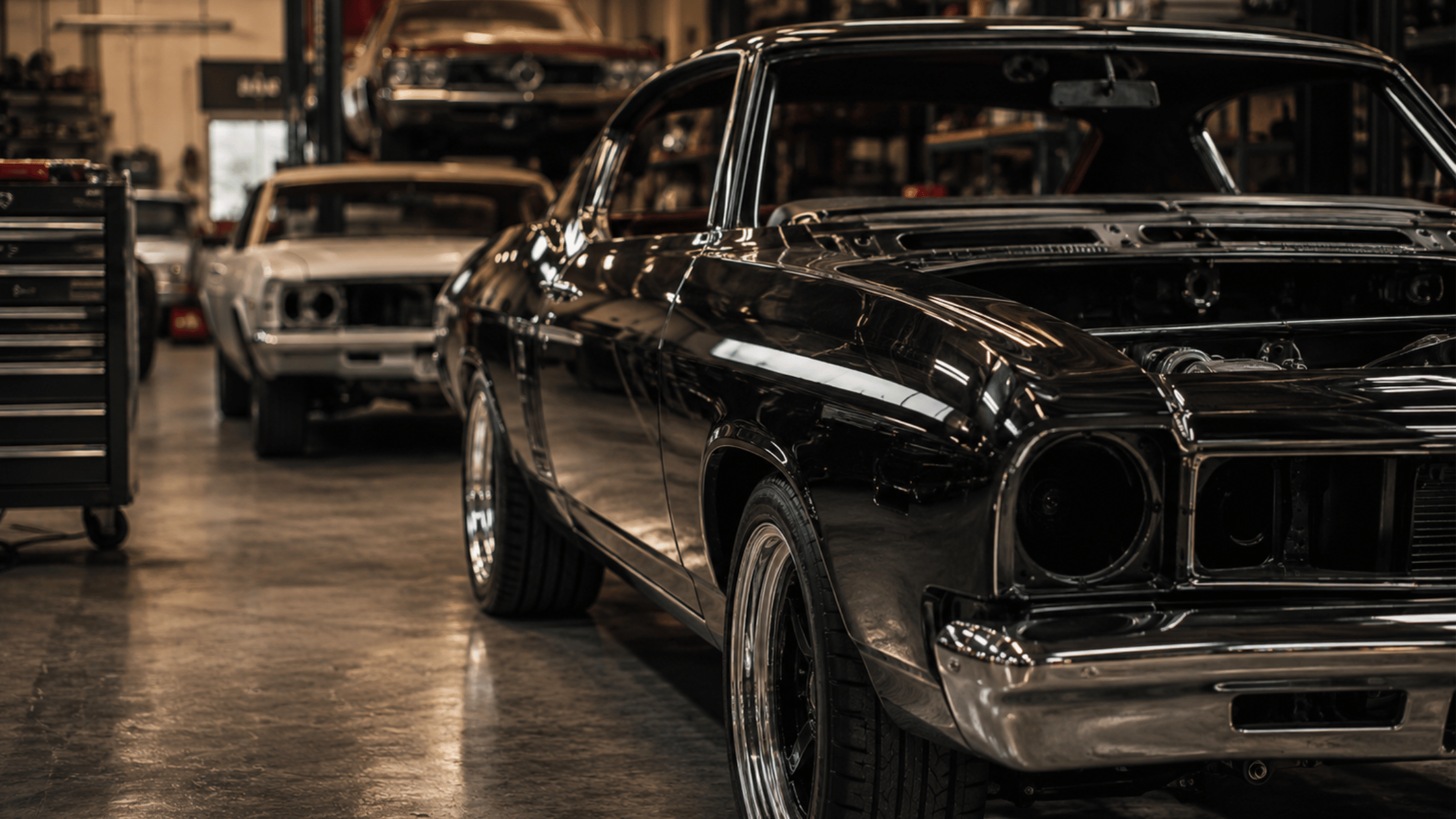
A classic car restoration shop specializes in returning older vehicles to their best possible condition through expert bodywork and refinishing.
Unlike modern collision repair, restoration often involves repairing years or even decades of previous damage, corrosion, and aging materials. Every vehicle presents a different set of challenges, which is why no two restorations are exactly alike.
While every project is unique, most classic car body and paint restoration follows the same general process.
Step 1: Sheet Metal and Rust Repair
Rust is one of the most common issues found on classic vehicles, even those that appear solid from the outside.
Corrosion often develops inside rocker panels, floor pans, wheel wells, quarter panels, and other hidden areas where moisture has been trapped for years.
Rather than covering rust with body filler, an experienced restoration shop removes the damaged metal and repairs or fabricates replacement sections as needed. Addressing rust correctly helps preserve the structural integrity of the vehicle and prevents future problems beneath the paint.
A quality restoration always begins with a solid foundation.
Step 2: Body Repair and Panel Alignment
Once structural repairs are complete, technicians begin restoring the vehicle's body.
This stage may include dent removal, metal finishing, custom fabrication, or repairing damage from previous accidents or older restorations.
Equally important is panel alignment.
Doors, fenders, hoods, and trunk lids should have consistent gaps and fit properly before primer or paint is applied. These small details are often what separate an average restoration from one that looks factory-correct.
Experienced restoration professionals spend hours adjusting panels because even the highest-quality paint cannot hide poor body fitment.
Step 3: Priming and Block Sanding
One of the most time-intensive stages of classic car body and paint restoration is surface preparation.
After repairs are completed, the vehicle is coated with high-build primer to help eliminate minor imperfections and create a uniform surface.
Technicians then carefully block sand the vehicle by hand.
Block sanding removes subtle highs and lows in the body panels, helping create the straight, smooth surfaces that define a high-quality restoration. It's a process that may be repeated multiple times, but it's also one of the biggest factors in the final appearance of the vehicle.
The paint only looks as good as the surface beneath it.
Step 4: Professional Paint Application
Once the body has been properly prepared, the vehicle is ready for paint.
Professional restoration shops carefully apply sealer, base coat, and multiple coats of clear coat in a controlled environment to achieve even coverage, long-term durability, and exceptional depth of color.
Whether the goal is to recreate the factory finish or customize the vehicle with a modern color, proper paint application requires precision, patience, and attention to detail.
Step 5: Wet Sanding and Final Polishing
Fresh paint is only part of the finishing process.
After the paint has fully cured, technicians wet sand the surface to remove minor imperfections before machine polishing it to a deep, uniform gloss.
This final stage enhances clarity, smoothness, and reflection while producing the finish most enthusiasts associate with a professionally restored classic car.
It's also the last opportunity to perfect the vehicle before it's returned to its owner.
How long does a classic car restoration take?
One of the most common questions owners ask is how long a restoration will take.
The answer depends entirely on the condition of the vehicle and the scope of the project.
A classic with minimal rust and body damage may require significantly less work than one with extensive corrosion, poor previous repairs, or missing panels. Because every restoration is different, experienced shops will inspect the vehicle thoroughly before providing an estimated timeline.
Quality restoration isn't rushed. Taking the time to repair the vehicle correctly leads to better results and a finish that lasts.
Choosing the right classic car restoration shop
Finding classic car restoration shops near me is only the first step. Choosing one with the right experience, craftsmanship, and communication is what makes the difference.
At Elite Automotive Finishes, we specialize in classic car body and paint restoration for owners throughout Mesa, Scottsdale, Phoenix, and the surrounding communities. From sheet metal repair and precise bodywork to premium paint application and final polishing, every restoration is completed with the care and attention to detail these vehicles deserve.
Whether you're preserving a family heirloom or building your dream classic, our team is committed to restoring your vehicle the right way—from the metal underneath to the final shine.