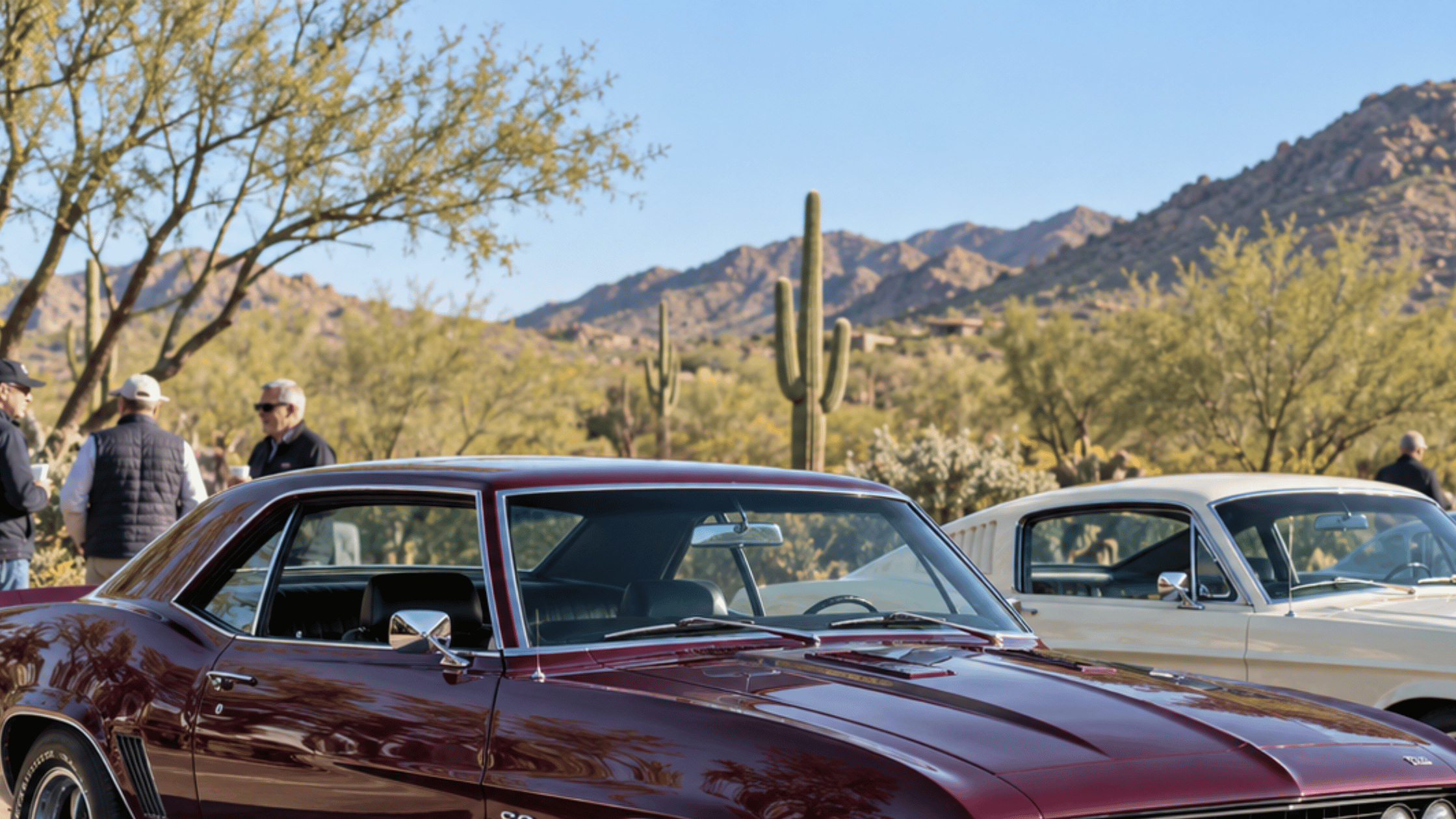
While collectors in colder climates are connecting battery tenders and putting their cars away, Arizona enthusiasts are getting ready to drive. Cooler mornings, outdoor gatherings, and January’s Scottsdale auctions make winter one of the most anticipated stretches of the local collector-car calendar.
In the Phoenix metro area, Arizona car show season comes into its own during the cooler months, with fall and spring gatherings surrounding January’s major auctions and concours events. For owners, that means a winter debut needs a preparation plan that starts well before the event.
Whether you are entering a Scottsdale car show, preparing to sell, or finally bringing a longtime project out of the garage, start by separating final cleanup from work that needs professional attention. Classic car restoration and refinishing can involve substantially more planning than a detail appointment.
Why Arizona’s Collector-Car Calendar Comes Alive in Winter
Arizona is a big state, and winter conditions in Flagstaff are very different from those in Scottsdale. In the Valley, however, cooler weather makes outdoor automotive events more comfortable than they are during the hottest summer months.
That opens the door to weekend cruises, club gatherings, outdoor displays, and opportunities to enjoy a classic without planning every outing around extreme afternoon heat.
October through March is a useful planning window for Valley enthusiasts, although individual events run on their own schedules. January is a particular focal point as collectors, buyers, sellers, and spectators arrive for Scottsdale’s auction activity.
Two major upcoming events illustrate why owners start preparing months ahead:
Barrett-Jackson Scottsdale: The 2027 auction is scheduled for January 23–31 at WestWorld of Scottsdale. Check Barrett-Jackson’s official website for current auction information, consignment requirements, and attendance details.
Arizona Concours d’Elegance: Scheduled for January 24, 2027, at Scottsdale Civic Center, this curated, judged exhibition has a different entry process from a casual cruise-in. Review the official Arizona Concours event information before making plans.
Attending, displaying, competing, and consigning are different commitments. Buying an admission ticket does not register your vehicle for a show or secure an auction entry.
First, Decide What “Ready” Means for Your Car
A weekend driver, a judged restoration, and an auction consignment do not need identical preparation.
Before authorizing work, identify the goal:
Your goal
What to prioritize
Enjoy local cruise-ins
Safe operation, clean presentation, and manageable cosmetic improvements
Enter a judged show
The event’s class rules, authenticity expectations, condition, and presentation
Prepare for auction
Accurate documentation, dependable operation, condition disclosure, and consistent presentation
Debut a restoration
Completion of the agreed scope, reassembly, testing, and final finish inspection
This distinction helps prevent unnecessary work. A well-preserved original car may deserve careful conservation, while a previously modified vehicle may suit a different approach.
If you are considering a repaint before selling, read our guide to whether repainting a classic car increases its value. Fresh paint is not automatically the right financial or historical decision for every collector car.
Inspect the Paint and Body Before Booking the Final Detail
A clean car is easier to evaluate than a dusty one. Start with a gentle wash, then inspect the body in daylight and under reflected light.
Look beyond overall shine. Check for:
Dents, creases, and waves in the panels
Chips, scratches, peeling, or cracking
Color differences between adjacent panels
Uneven gaps or trim that does not sit correctly
Bubbling around wheel openings, lower doors, and window surrounds
Deterioration around seals, seams, and previous repairs
Detailing may improve surface contamination, some oxidation, and certain light defects. It cannot straighten metal, repair perforated panels, or restore failing paint adhesion.
Paint bubbles also deserve investigation before polishing or refinishing. Our explanation of rust repair on a classic car covers why visible damage can represent a larger problem beneath the finish.
The point of this inspection is to establish the work the car actually needs before the final cleanup begins.
Schedule Bodywork Around the Event, Not the Other Way Around
A January event can feel distant in November. For a car that needs substantial metalwork or refinishing, that window may already be tight.
The sequence can include disassembly, evaluation of previous repairs, parts sourcing, metal repair, surface preparation, refinishing, reassembly, and final inspection. Discovering corrosion beneath old paint can change both the scope and the completion date.
Our guide to how long it takes to restore a classic car explains why the vehicle’s starting condition matters more than a generic turnaround estimate.
Tell the shop your event date at the first conversation. Then establish:
Which work is essential before the event
Which improvements can reasonably wait
What findings could change the schedule
Whether the proposed scope fits the available time
A full restoration should not be compressed into a last-minute cosmetic refresh. If the necessary work cannot be completed properly before the event, changing the debut date may be the better decision.
Classic Car Detailing Before Auction: Preserve What You Have
Classic car detailing before auction should make the vehicle easier to inspect and appreciate while respecting its materials and history.
Older paint, aged chrome, delicate upholstery, and original trim may need different treatment from modern finishes. An aggressive approach that works on one vehicle can damage another.
Assess Before Polishing
Do not assume every dull finish needs heavy machine correction. Paint type, condition, previous repairs, and available film thickness affect what can safely be achieved.
Discuss the desired result with a professional who understands older finishes. Preserving sound original material may be more appropriate than chasing a perfectly uniform appearance.
Clean the Areas Buyers Actually Examine
Good presentation extends beyond the hood and roof. Door jambs, weatherstripping channels, glass edges, the trunk, wheels, and interior seams contribute to the overall impression.
Clean the engine compartment carefully, protecting electrical components and vulnerable finishes. Avoid heavy dressings that leave surfaces unnaturally glossy or make them difficult to examine.
Follow Instructions for Fresh Paint
If the vehicle has recently been refinished, ask the refinisher when and how it can be washed, polished, waxed, coated, or covered. The appropriate timing depends on the products and process used.
Once the finish is ready for routine care, follow a consistent maintenance plan. Our guide to maintaining a show-quality finish on your classic car is a useful starting point.
Classic Car Auction Prep Includes More Than Appearance
A polished exterior cannot substitute for accurate records or a car that starts and operates as represented.
If you plan to consign, contact the auction company early. Confirm its acceptance process, paperwork requirements, photography specifications, fees, and vehicle delivery deadlines before building your schedule.
Organize the information relevant to your car, including:
Ownership and title documents
Restoration invoices and progress photographs
Maintenance records
Documentation supporting significant equipment or authenticity claims
A clear description of modifications and known defects
Avoid describing a vehicle as “numbers matching,” “all original,” or “fully restored” unless you can substantiate what those terms mean for that car.
Arrange a mechanical inspection as appropriate, particularly if the vehicle has spent extended time parked. Tires, brakes, steering, cooling, fuel delivery, battery condition, and leaks deserve attention before driving or transporting it.
For auction photographs, use clear, representative images. Do not edit out defects or let outdated photographs stand in for the vehicle’s current condition.
Work Backward From Your Scottsdale Car Show Date
Use this sequence as a planning framework, with the actual schedule based on your vehicle and event requirements.
As early as possible: Confirm eligibility, registration or consignment requirements, and deadlines. Arrange a paint and body assessment if repairs are being considered.
Before final photography and detailing: Complete the agreed repairs, reassembly, and necessary mechanical work. Allow time to inspect the results and address outstanding items.
Before transport: Confirm collection or delivery arrangements, insurance details, required paperwork, keys, and any operating instructions the transporter or event staff need.
Immediately before the event: Complete an appropriate final clean, check fluid levels and tire pressures, and pack the event documents and suitable cleaning supplies.
Leave room for weather and transport changes. Arizona winter weather can still include rain, chilly mornings, and dusty conditions.
Classic Car Restoration for Scottsdale Events Starts With a Realistic Plan
If you are searching for classic car restoration near Scottsdale, compare shops based on their experience with your vehicle, the proposed repair process, and the scope they can realistically complete.
Our auto body shop, Elite Automotive Finishes, is located in Mesa and offers classic car bodywork, sheet metal restoration, and paint refinishing. An initial evaluation can help establish whether your car needs targeted repairs, a more extensive refinish, or a longer restoration project.
Winter gives Arizona collectors plenty of reasons to bring their cars out. Preparing early gives you time to make thoughtful decisions about the vehicle you want to present.
Contact us to discuss your classic car, the work you are considering, and your target event date.