Can Rust Be Repaired on a Classic Car?
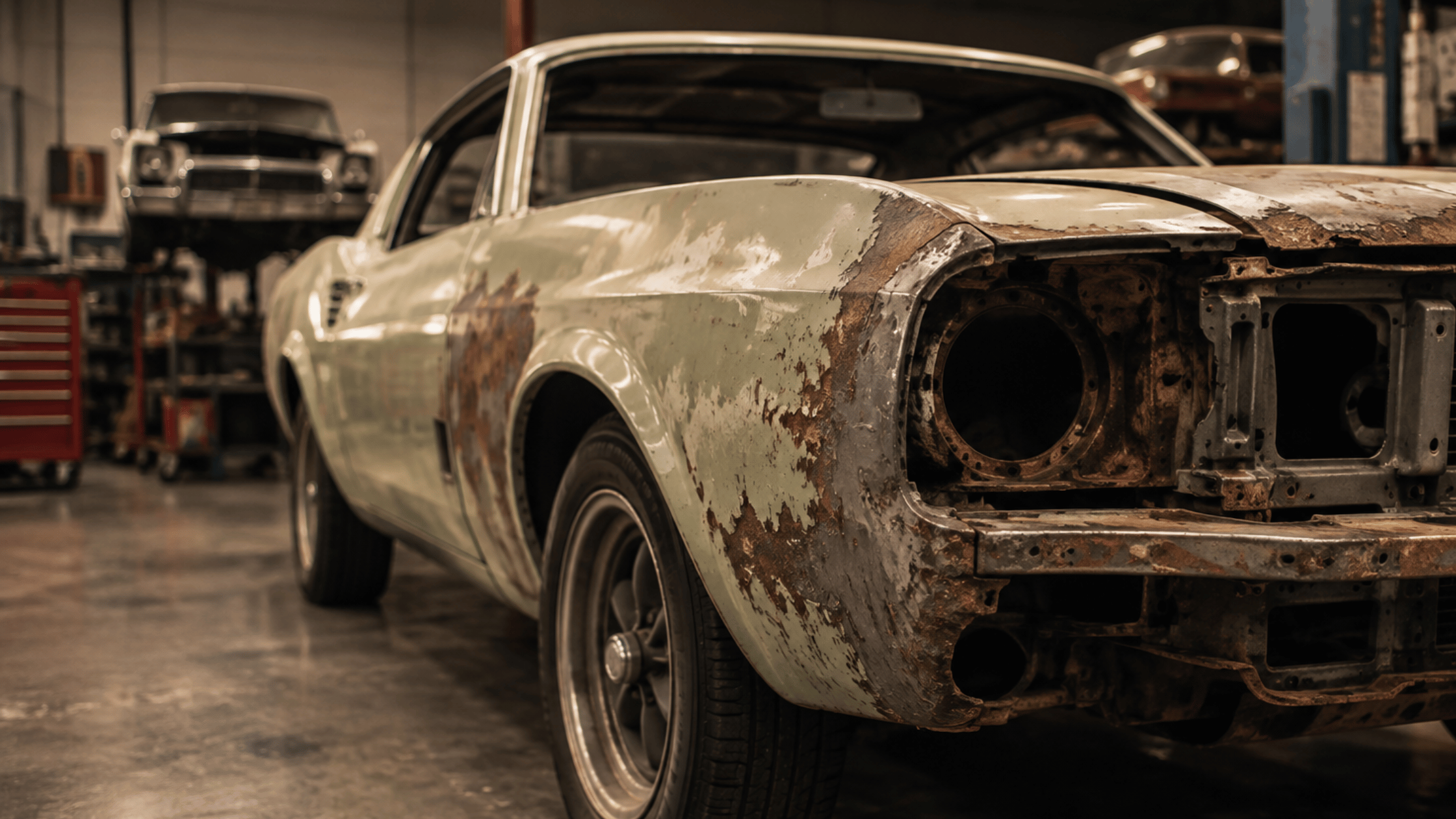
Rust is one of the most common problems found during a classic car restoration, but it does not always mean an entire panel needs to be replaced. In many cases, rust can be repaired depending on how severe the corrosion is, where it is located, and whether the surrounding metal is still structurally sound.
At Elite Automotive Finishes, proper rust repair starts with evaluating the full extent of the corrosion before deciding whether the original metal can be saved or should be replaced.
Can Rust on a Classic Car Be Repaired?
Yes. Surface rust and minor corrosion can often be repaired when the underlying metal remains strong.
The affected area typically needs to be stripped to expose clean metal, allowing the technician to determine how far the rust has spread. Once the corrosion is removed, the metal can be properly repaired, prepared, and protected before refinishing.
When Does Rusted Metal Need to Be Replaced?
If corrosion has eaten through the metal or significantly weakened a panel, replacement may be the better long-term solution.
Metal may need to be replaced when:
Rust has created holes
The metal has become thin or brittle
Corrosion extends beyond the visible area
Structural areas have been compromised
Previous repairs are hiding significant damage
Depending on the vehicle, this may involve replacing a small section of damaged metal or addressing a larger portion of the panel.
Why Can Classic Car Rust Be Worse Than It Looks?
Rust frequently develops in areas that are difficult to see. A small bubble underneath the paint, for example, can be a sign that corrosion is spreading beneath the finish.
Common areas for hidden rust include rocker panels, wheel arches, floor pans, lower doors, quarter panels, trunk floors, window openings, and panel seams.
Previous repairs can also hide corrosion. Older body filler or paint may need to be removed before the true condition of the metal becomes clear.
A professional classic car restoration shop should evaluate these areas carefully before developing a repair plan.
Can You Paint Over Rust on a Classic Car?
Painting over active rust does not solve the problem. Rust can continue spreading underneath a new finish, eventually causing bubbling, cracking, discoloration, or further deterioration.
Proper preparation is especially important with classic vehicles. Rust should be removed and compromised metal repaired or replaced before primer and paint are applied. Otherwise, even a high-quality paint finish may not last.
Why Does Proper Metalwork Matter?
The metal underneath the paint is the foundation of a quality classic car restoration.
Proper metal repair helps create straight panels, solid structural areas, and a stable surface for bodywork and refinishing. Poor or incomplete rust repairs can eventually lead to visible imperfections or corrosion returning beneath the paint.
Experienced classic car restoration shops understand that the goal is not simply to make the vehicle look good when it leaves the shop. The underlying repairs need to be completed correctly so the finished restoration can hold up over time.
Should Rust Be Repaired Before Repainting a Classic Car?
Yes. Rust and other metal damage should be addressed before investing in a new paint finish.
Once the necessary areas are exposed, technicians can identify corrosion, previous repairs, dents, body filler, and other issues that could affect the final result. Completing these repairs first creates a better foundation for primer, paint, and finishing work.
Classic Car Rust Repair at Elite Automotive Finishes
Rust does not necessarily mean a classic car is beyond restoration. The right repair depends on the condition of the metal and how far the corrosion has progressed.
Elite Automotive Finishes provides classic car body repair and restoration services in Mesa, Arizona, working with vehicle owners throughout the Phoenix and Scottsdale areas. Our team evaluates each vehicle individually to determine what can be repaired, what should be replaced, and how to create a solid foundation for the rest of the restoration.
If your classic car has visible rust, bubbling paint, previous body repairs, or hidden corrosion you're concerned about, contact Elite Automotive Finishes to have the vehicle evaluated.